← All postsBusiness Tips for Vendors, Markets & Small Businesses
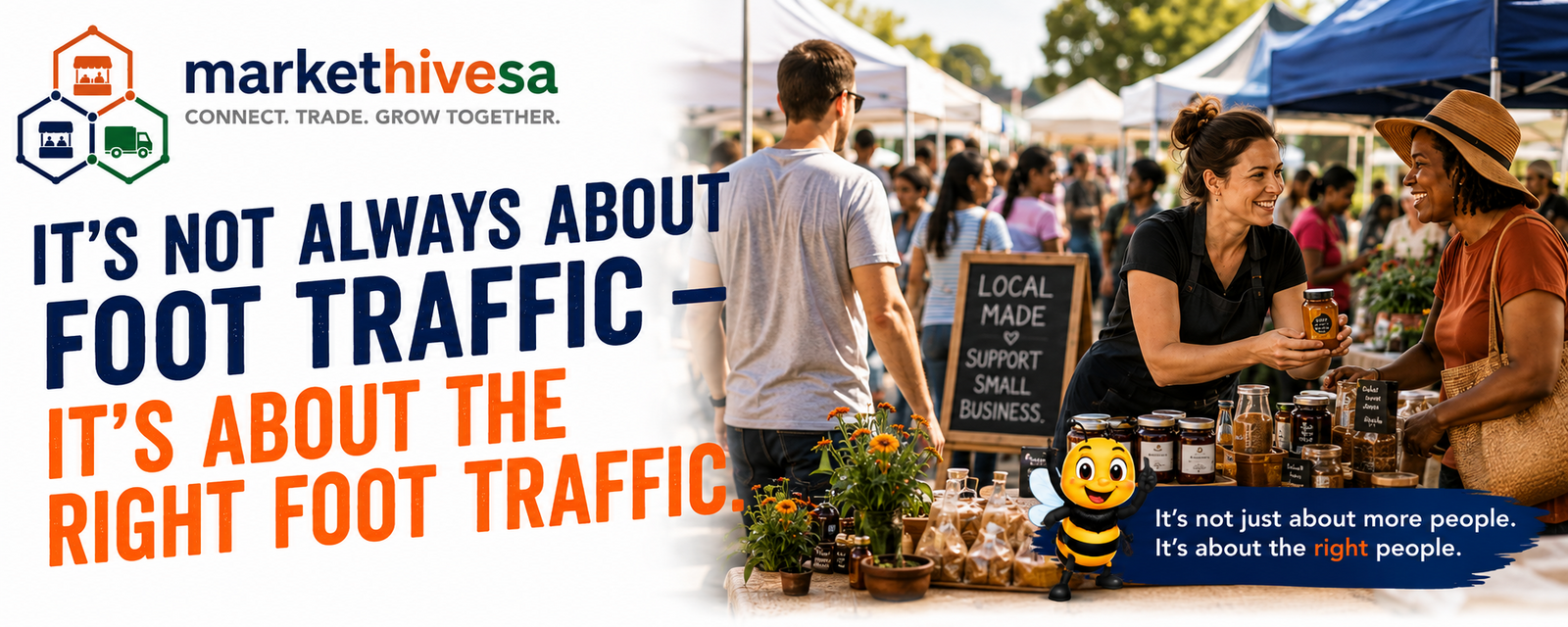
🐝 It's Not Always About Foot Traffic – It's About the Right Foot Traffic
Market Hive Admin · 06 Sep 2026
How do you know if the market you're attending is bringing in the right clientele for your business?
🐝 It's Not Always About Foot Traffic – It's About the Right Foot Traffic
How do you know if the market you're attending is bringing in the right clientele for your business?
A busy market can look like a great opportunity.
Crowds are moving between stalls, people are carrying food and drinks, there's a buzz in the air—and you naturally assume plenty of potential customers are passing by.
But busy doesn't always mean profitable.
For Vendors and small businesses, attending a market requires an investment of money, time, stock and energy. Before committing to a market, it's worth asking one important question:
| Are the people attending this market likely to buy what I'm selling?
Because not every good market is necessarily the right market for your business.
Know Your Customer First
Before evaluating a market, think about the people who already buy from you—or the people you want to reach.
· Who is my ideal customer?
· What age group am I appealing to?
· What is my typical price point?
· Is my product an everyday purchase, a gift or a luxury?
· Are my customers families, tourists, food lovers or collectors?
· Is my product something people buy on impulse or consider carefully?
Understanding your customer makes it easier to recognise which markets may be a good fit.
A Vendor selling affordable children's accessories may have very different opportunities from someone selling premium handmade jewellery. Both businesses can succeed—but perhaps not at the same markets.
The Right Customer
Look Beyond the Foot Traffic
We've all seen the advertising: "Thousands of visitors expected!"
That sounds promising, but attendance numbers don't tell the whole story.
A large family-focused market may attract thousands of people looking for food, entertainment and a day out. Meanwhile, a smaller artisan market may attract fewer visitors who specifically come to discover and purchase unique products.
The question isn't simply how many people attend. Look at what they're doing once they get there.
· Browsing or buying?
· Stopping to engage with Vendors?
· Carrying shopping bags?
· Interested in handmade and artisan products?
· Spending time comparing and considering purchases?
A smaller market with engaged shoppers can sometimes deliver better results than a much larger event.
Find Your Right Clients
Visit Before You Book
Whenever possible, visit a market as a customer before committing to a stall. Spend time walking around and observing.
· The type of people attending
· Which stalls attract the most interest
· The general price range of products
· Whether shoppers are buying or simply browsing
· The overall atmosphere and purpose of the market
Look at the mix of Vendors too. Do your products feel like they belong there?
You don't necessarily want to be exactly the same as everyone else, but there should be some connection between what you offer and what the market's customers expect to find.
Location Can Influence Buying Behaviour
South African markets are wonderfully diverse.
A market in a tourist destination may attract visitors looking for locally made products, gifts and something uniquely South African.
A neighbourhood market may rely heavily on regular customers looking for familiar favourites and affordable products.
An artisan or lifestyle market may attract shoppers specifically looking for quality, speciality and handmade goods.
None is better than another. They simply serve different communities and customer expectations.
Understanding the area and the market's identity can help you decide whether your business is likely to connect with its visitors.
Do Your Homework Online Too
A market's social media pages can tell you a great deal about its audience. Before booking, have a look at their Facebook and Instagram pages.
· What type of events do they promote?
· Which Vendors do they feature?
· What kind of posts receive the most engagement?
· Is the focus on shopping, food, entertainment or family activities?
· Do they actively promote their Vendors?
· What do photos of previous markets tell you about the clientele?
The way a market presents itself often gives you clues about the people it attracts.
We're always up for some research
Talk to Other Vendors
Existing Vendors can provide valuable insight. You don't need to ask anyone for their sales figures, but a conversation can help you understand the market better.
· How long have you been attending?
· Do you find the market worthwhile?
· Is the customer base consistent?
· What types of products seem popular?
· Do customers return regularly?
· Is the market well organised?
· Do the organisers actively market the event?
One person's experience shouldn't make the decision for you, but speaking to several Vendors may reveal useful patterns.
Make Sure Your Price Point Fits
This doesn't mean changing your prices to suit every market.
It means finding markets where customers are comfortable with the value and price point of your products.
If visitors primarily come looking for bargains, premium handcrafted products may take longer to sell.
Equally, if you've invested time and skill into producing quality artisan goods, you shouldn't feel pressured to undervalue your work just to compete.
The aim is to find an environment where your product and pricing make sense to the customer.
Consider the Real Cost of Attending
The stall fee is only one part of the equation. For many South African small businesses, a market day can also include:
· Petrol and travel costs
· Tolls, where applicable
· Stock or ingredients
· Packaging
· Card transaction fees
· Staff costs
· Parking
· Accommodation for out-of-town markets
· Your time
A R500 stall fee may sound affordable, but once everything else is added, the actual cost of attending can be considerably higher.
That doesn't mean expensive markets aren't worthwhile. It simply means you need to know what you need to earn before the day becomes profitable.
Track Your Results
One of the most useful things a Vendor can do is keep records. After each market, make a few notes:
| What to Track | Why It Matters | Sales | Did the market perform financially? | Expenses | What did the day actually cost? | Best Sellers | What were customers buying? | Customer Interest | What did people ask about? | Foot Traffic | Was the market genuinely busy? | Location | Did the area suit your business? | Return Potential | Would you attend again?
Over time, these records can reveal valuable trends.
· Smaller markets outperform larger ones.
· Saturday mornings work better for your products.
· Certain areas consistently bring better customers.
· A market closer to home is more profitable than one with higher foot traffic further away.
This is where experience becomes useful business information.
Keep Your Stats
Don't Judge a Market on One Day
A quiet market doesn't automatically mean it's a bad market. Attendance and spending can be influenced by many factors, including:
· Weather
· Month-end spending pressures
· Payday weekends
· School holidays
· Public holidays
· Major sporting events
· Other events happening nearby
· Seasonal buying habits
Give a new market a fair opportunity where possible.
However, if you've attended several times and consistently find that customers aren't engaging with your products, it may be time to reconsider whether the market is the right fit.
Not every unsuccessful market day means there's something wrong with your business. Sometimes, it's simply a mismatch.
You Don't Have to Attend Every Market
When you're growing a small business, it's tempting to say yes to every opportunity.
But more markets don't automatically mean more profit.
Each event requires preparation, stock, travel and your valuable time.
Choosing your markets carefully can be far more beneficial than trying to be everywhere.
| 🐝 Buzz's Bottom LineDon't choose a market based on crowds alone. Take the time to understand the market, its customers and what they come there to buy. The best market for your business isn't necessarily the biggest or busiest. It's the one where your business and its customers are most likely to connect. Because it's not about getting the most feet past your stall. It's about getting the right feet to stop. 🐝
Market Check List
About Market Hive SA
Market Hive SA (Pty) Ltd is an online platform designed to help South African Markets, Vendors and Suppliers become more discoverable and connected.
We're building a growing community around the people and businesses that make South Africa's market industry thrive—before, during and after Market Day.